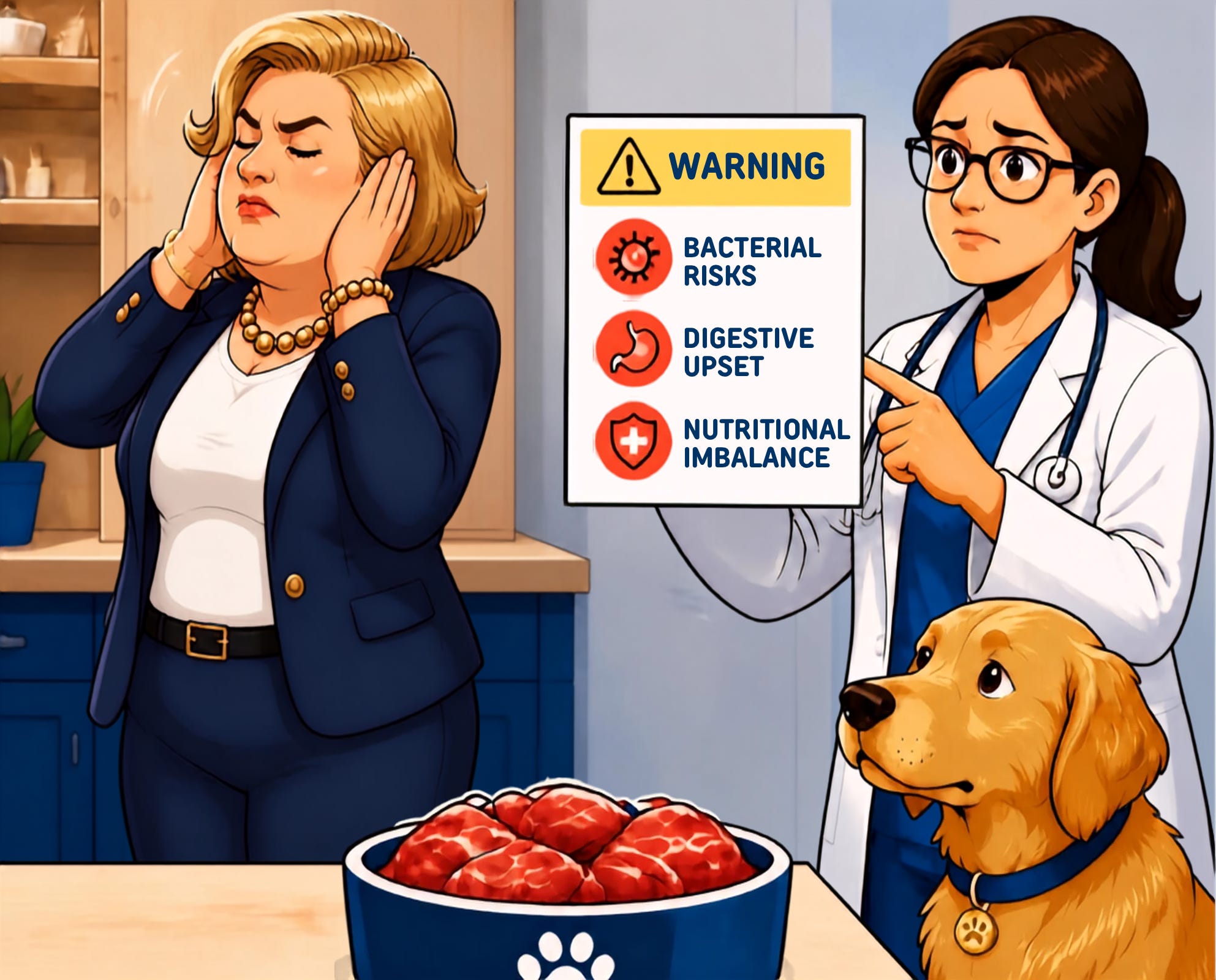
Over the past two decades, sales of raw dog and cat food products in the United States have climbed steadily despite repeated warnings from veterinarians, regulators, and major veterinary organization. One owner survey conducted by Nextin Research in 2025 showed 10% of U.S. dogs’ meals (and 7% of cats’) included raw food at least once in the prior month.
In August 2026, the Justice Department sued raw pet food manufacturer Arrow Reliance, a serial recipient of FDA enforcement action and the maker of Darwin’s Natural Pet Products. The complaint alleged repeated contamination. “Despite these warnings, Defendants’ raw pet food continues to test positive for pathogens,” the complaint says. Darwin’s disputes the allegations: “We strongly disagree with the FDA’s allegations and will vigorously defend the case,” the company wrote in its response.
“The AVMA discourages feeding any raw or undercooked animal-sourced proteins (e.g., meat, poultry, fish, egg, milk*) to dogs and cats because of their risk to human and animal health,” according to a statement on its website.
Reacting days after the DOJ’s action against Darwin, Dr. Jennifer Larsen, a prominent veterinary nutritionist at UC Davis wrote in a Facebook post: “Numerous pet illnesses and deaths, and at least one ill child, but this company says it’s ‘natural’ and does not care to make any changes. Deplorable.” Darwin’s declined an email request to respond.
Dr. Megan Duffy has been a general practice veterinarian for more than two decades at the Katonah Bedford Veterinary Center in Bedford Hills, New York (now owned by VCA). Asked how she navigates clients who feed raw diets, she wrote:
“I tell clients that I do not recommend feeding raw food nor does the AVMA,” Dr. Duffy said in an email. “I tell them that animals can get very sick from E. coli, Salmonella and other bacteria found in raw food, just like people can. I tell them that if they insist on feeding raw food that we are going to have to agree to disagree.”
Dr. Ann Hohenhaus is a board-certified oncologist and internist at the Schwarzman Animal Medical Center in New York City. A senior veterinarian and director of pet health information who is a go-to authority for reporters and even fellow veterinarians, Dr. Hohenhaus told TCR she sometimes encounters client compliance challenges when it comes to nutrition, including raw diets - yes, even owners of pets with cancer feed raw diets. She offered this insight into her clients’ thinking:
“When your pet is sick and you have no control over the illness, treatment, or your pet’s response to treatment, you’re looking to regain control, Dr. Hohenhaus wrote in an email to TCR. “And what can you control? The food. The one little piece of their life you can control is their food. People want to be in control, and people want for their pets what they want for themselves. Feeding your pets brown food every day may be nutritious, but it lacks curb appeal.”
At least one other top vet agrees that “curb appeal” matters. “A lot of owners like that they can identify what’s in the diet,” Dr. Jennifer Larsen, a veterinary nutritionist at the University of California, Davis, said on The Vetrospective podcast in February 2026.
The emotional appeal is familiar to Dr. Lisa Freeman, a leading veterinary nutritionist at Tufts. In a 2013 JAVMA article, she described feeding as “a form of love,” but said “the existing research shows that the risks outweigh any minimal benefits.” She added:
“Proponents of feeding commercial or home-prepared [raw diets] often claim nutritional superiority of these diets and important health benefits,” Dr. Freeman wrote. “Many claims of benefits are largely unproven,” she asserted, “and not based on scientific evidence, but they appear plausible to well-intending pet owners who want to feed a diet that will optimize health and wellness of their pets.”
January 2025: FDA Warns Against Raw Pet Food
In January 2025, the Food and Drug Administration warned that pets could contract H5N1 bird flu by eating contaminated raw animal products. Cats, the agency said, “can experience severe illness or death from infection with H5N1.” The following month, Oregon officials reported that two cats in separate households had been euthanized because of the severity of their illnesses after eating Wild Coast Raw pet food. Testing detected the virus in both cats and the food. (See this FDA warning and the Oregon Department of Agriculture’s findings.)
Yet the appeal of raw feeding persists. Research on owners’ choices points to distrust of veterinary advice, a preference for food perceived as “natural,” “ancestral,” and the influence of alternative sources of expertise.
An international study published in Vet Record in June 2020 shows a material change in pet feeding trends over the prior decade, with owners moving away from traditional commercial pet foods and, instead, towards “fresh”, raw, or home-made diets.
The research drew on a survey of 3, 161 pet owners across Australia, New Zealand, the United States, Canada, and the United Kingdom, conducted between September 2016 and January 2017 and produced at least one astonishing result: Although 79% of dogs and 90% of cats were still receiving some traditional food in their diets, only 13% of dogs and 32% of cats were fed only traditional diets. Also notable was that two-thirds of dogs (66%) and more than half of cats (53%) were fed raw food as part of their normal diets.
To be sure, pet owners who feed raw food and treats to pets appear to represent a marginal portion of the total population. In one American study, a 2024 analysis of 40,367 dogs in the Dog Aging Project found that about 4 percent primarily ate commercial raw food and 2 percent homemade raw food, compared with 82 percent eating kibble. The surveys, collected from 2020 through 2022, do not establish raw feeding’s prevalence among all American dogs today.
Most intriguingly, the study shows that wealthier individuals are more likely to feed raw diets: Commercial raw diets were more common among households reporting annual incomes of at least $180,000 while kibble remained dominant across income levels.
The Trust Gap
A more telling study may be a Virginia Tech-led study published in PeerJ in 2017 which examined the trust gap between veterinarians and owners.
Of 2,171 completed online surveys, 804 respondents reported feeding raw animal products. Those owners reported “lower trust in veterinary advice” than other respondents. Twenty percent relied on online resources to decide what or how much raw food to feed; only 9 percent reported consulting a veterinarian about those decisions.
Writing in Clinician’s Brief in 2018, Dr. Jennifer Larsen urged veterinarians to discuss owners’ feeding philosophies, warning that “fear or guilt sometimes influences these choices due to misinformation regarding risks and benefits of specific products and feeding practices.”
Alternative is Big Business
On the website of Dr. Judy Morgan’s Naturally Healthy Pets, owners are invited to “Kick the Kibble.” “Feeding your pet a species-appropriate diet is the best way to ensure a long, healthy life,” the site declares. Its offerings include raw-feeding lessons and freeze-dried raw meals.
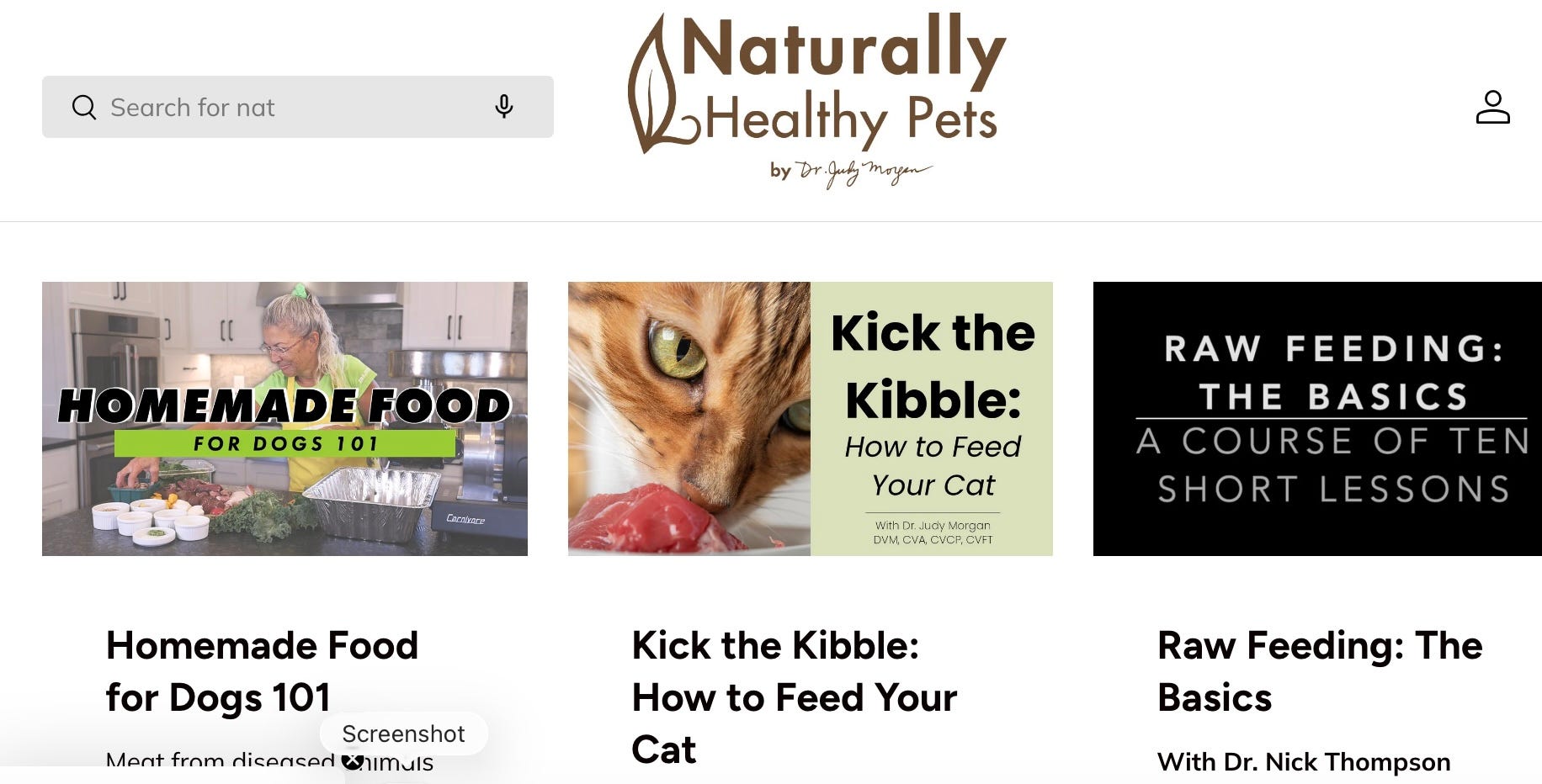
Raw diet promotion also draws on veterinary credentials. Dr. Morgan is herself a veterinarian – although her license is no longer active - who promotes holistic care and a deluge of wellness products, including raw diets. Her business combines educational material with products customers can buy. Dr. Morgan declined to respond to an email from The Canine Review asking whether she knew of adverse events involving products sold through her business.
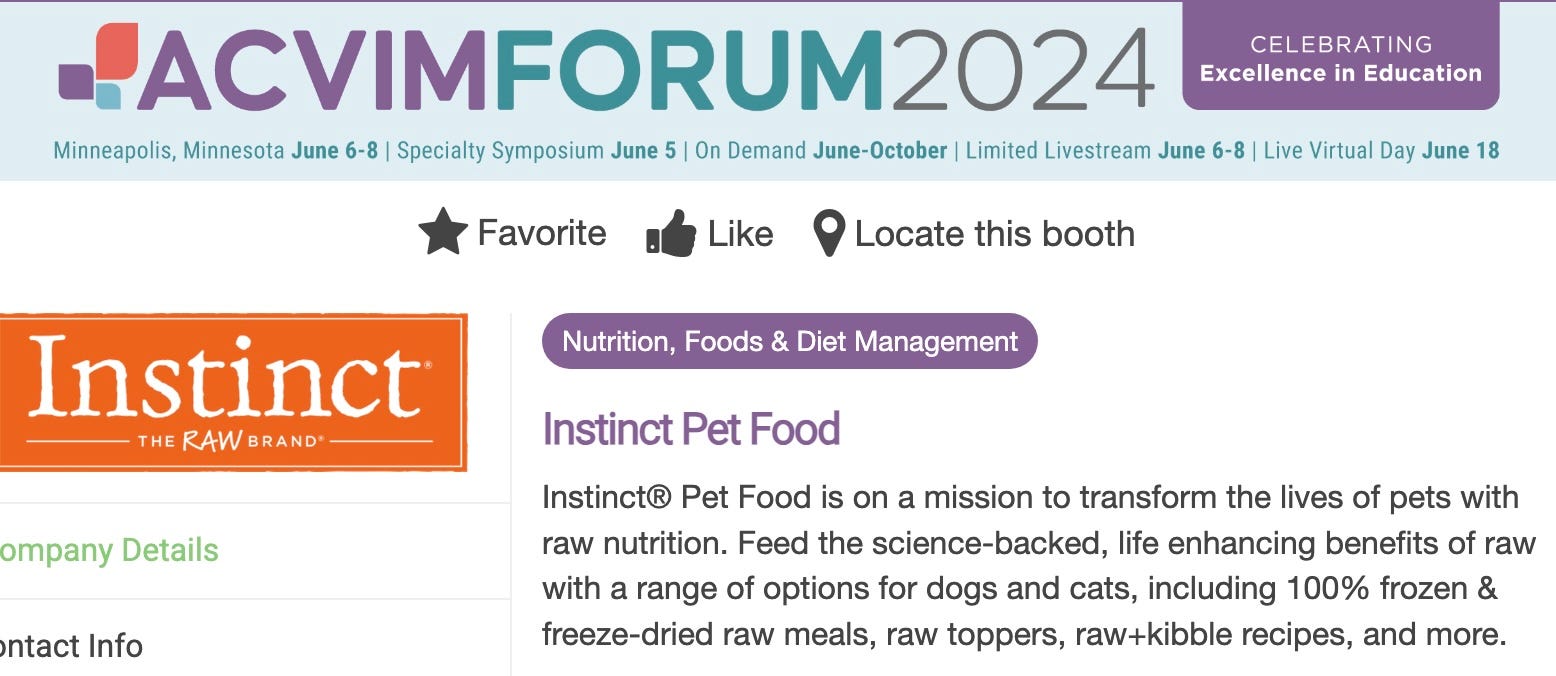
The raw-food manufacturer Instinct makes its appeal explicit on its website: “Fresh, raw food is pure, powerful, and packed with everything pets need to thrive.” The company also promotes its university research partnerships and free continuing education for veterinary professionals. Instinct is listed as a major underwriter of many major veterinary conferences. The company even sponsors continuing education courses for veterinarians.
What the Warnings Describe
The AVMA, which dedicates an entire page of its website to warning owners against raw diets, warns, “Apparently healthy dogs and cats can have subclinical infections with these organisms and pose a risk to other animals and people, especially young, elderly, pregnant, and immunocompromised individuals,” the AVMA says. “People handling contaminated raw pet foods are also at risk of becoming sick.”
Owners may nevertheless point to shinier coats or smaller stools. On the Vetrospective podcast, UC Davis’s Dr. Jennifer Larsen attributed those observations to differences in fat and fiber content, rather than to leaving meat uncooked. On the podcast, she said, “there is no evidence that raw diets are of any benefit.”
Related Reporting
Pet Food Company Targets, Taunts Veterinarians (December 2020 Emily Brill)
“Dr. Jean Dodds” Listed As Speaker In Upcoming Dog Nutrition Summit (October 2022 Emily Brill)
Martha Stewart Launches “Veterinarian Reviewed Dog Food.” Which Vet? She Won’t Say. (August 2023 Emily Brill)
Misinformation Spreader Mercola Owns Veterinarian’s Popular Blog. Most Readers Have No Idea. (April 2024 Nicole Rosenthal)